Showing posts with label The Eats Sheet. Show all posts

Monday, November 30, 2009

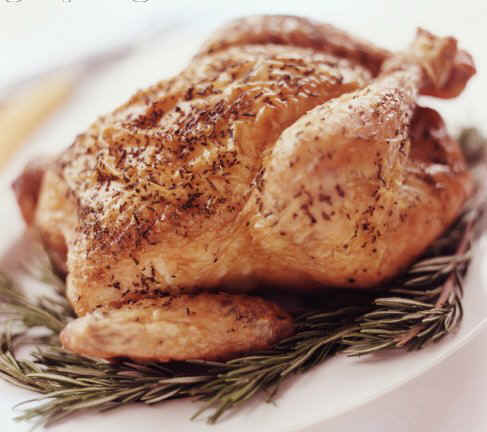
Nearly Perfect Turkey

We visited my wife's family in Pittsburgh for Thanksgiving. Soon after we arrived, it became clear that her grandmother was feeling stressed out about having to roast a turkey for the whole family. It turns out that despite being in her late 70s, she has admirably escaped roasting a turkey for her entire life. Since she seemed stressed, and also because I wanted to help her keep up her streak, I volunteered to roast the turkey for the 30 people that would be eating with us Thursday afternoon.

The turkey was delivered fresh the day before, which made these easier for me. But it was just a few ounces shy of thirty pounds. That afternoon I went shopping to pick up a few ingredients. Once we made sure that it would fit in the roasting pan, and that once in the roasting pan, they would both fit in the oven, we put it back in the fridge and I set my alarm for 5:00am, certain that roasting a beast this size would take many hours.

We were staying with a cousin down the street, so after a shower and a nice early morning walk, I started prepping the turkey just before 6:00am. I made sure everything was patted nice and dry, inside and out, and made up a rub of salt, black pepper, and sage. I wished I had my kosher salt, but regular iodized salt would have to do. I used plenty of this rub inside the cavity and then used the rest to give the breast a nice massage with some vegetable oil. I then put the turkey in the roaster and let it sit and rest while I did the rest of the prepping.

First, I quartered an apple and an onion and put them in some apple cider (about a cup or so) on the stove with a dash of apple cider vinegar and plenty of salt and pepper. Once this started to boil, I killed the heat and let it steep for a few minutes. This went into the cavity with about 10 sage leaves and a few sprigs of thyme and the whole thing went in the oven at 500.

I don't think my wife's grandma's oven had been at 500 for quote a while because it smoked a bit and kept on setting off the fire alarm. Not wanting to wake the rest of the family, I just took out the battery. Once that had been in for about 20 minutes or so, I knocked the heat down to 300. After about two hours, the breast was starting to look nice and browned, but I didn't want it to get much more browned, so I covered the roaster in foil and let it finish.

After another two hours, the breast was registering around 170, so I turned the heat off. I would have liked to finish it then, but we had some family activities to participate in and we were still a few hours away from eating, so I left it in the oven. When we got back about an hour and a half later, I took it out and made a glaze. The glaze was a stick of butter melted over low heat and whisked together with a few tablespoons of maple syrup, the leaves from a few sprigs of rosemary, and plenty of salt and pepper. This glaze went all over the outside and I sprinkled a few more rosemary leaves into the glaze, just for aesthetic effects. Then I covered it back up with foil to keep things moist while I let it rest.

I realize that a glaze isn't traditionally used for a turkey, that it is usually reserved for hams, but I thought it might be a good way to avoid a dried-out breast. But accordingly, I went for a more butter-based than a sugar-based glaze like you might see on a ham.

After an hour of resting I took off the foil, lifted it onto a cutting board, and let it continue to cool for another half hour while I got going on the gravy. The gravy base was a nice mixture of the salty drippings and the mellow sweetness of the apple and maple flavors. I scraped up all the browned bits, strained out most of the solids, and put this over high heat to reduce it down a bit. I then added some milk (maybe 2 cups or so, about the same amount as the base) and knocked the heat back down to low. I then added salt and a bit of pepper, and just a splash of the apple cider vinegar to wake up the flavors. Then I thickened it by taking some out, whisking it with some corn starch in a cup, and adding it back in. I kept it over medium heat until it thickened, and then kept it hot over low heat while I carved the turkey.

Most of the dark meat was so falling-off-the bone tender that there really wasn't much carving to do other than to slice through the skin and take off the drumsticks. The thighs basically just shredded themselves as I lifted them onto the platter. As for the breast, I took it off whole and then carved across the grain, laying the slices tanding up next to each other on the platter with the skin side up. Most people don't like to eat the skin, but I like to give them the option. Turkey and chicken breast are usually eaten skin off, but when you use a barbeque sauce or a glaze, like I did, then it seems a waste to just strip the skin off and throw it away. Instead, I like to serve it as duck is traditionally served with the skin. The skin also has the added bonus of keeping things moist while you wait to being the meal.

The breast was a little more done than I would have liked, but overall, the bird was juicy and not dried out and the diners universally acclaimed it. I also had a thought---rather than (or maybe in addition to) putting the glaze on before carving, it might be nice to carve it all up and put the glaze on after its all on the platters and ready to serve. This would let it soak in and keep things moist, and it would also warm things up, which would allow you to let the turkey cool more before carving. This cooling time is beneficial because it makes the meat easier to carve without burning your fingers, but also because it allows the juices in the meat to cool and absorb back into the beat rather than simply steaming out as vapor when you cut into the meat.

Monday, November 23, 2009

The Eats Sheet: Butternut Squash Pasta.

I never been a huge squash fan. I do like a butternut squash soup, and deep-fried zucchini is good, but I've just never really gotten into other squashes. Like acorn squash. I the last time I had some was when I gagged a few bites down at a federal courts dinner a few months ago. It reminded me why I don't buy acorn squash.

But lately I have been more into the idea of eating seasonally, so I have resolved to be more open to winter squashes this year. I made a little butternut squash pasta last night that definitely made me open to more winter squash possibilities. I got the idea for the recipe out of a Williams Sonoma cookbook, but I made my own variations that I think improved it.

1. You start with one butternut squash. You peel it, seed it, and chop it into small bite-sized cubes, and put these in a large bowl. Butternut is hard, so it helps to have a big cleaver or chef's knife. And it helps to to tap the cleaver with a mallet, using it like a wedge to split the squash rather than pushing with your hands.

2. Then peel an onion, half it, and slice it thinly. But not too thinly because you're going to be roasting this---you want it to char and carmelize, but you don't want it to turn into charcoal. Like maybe a quarter-inch slices. Put them in the bowl.

3. Take 4 or 5 slices of thick bacon---as thick as you can find it---and cut them into half-inch pieces. Add them to the bowl.

4. Sprinkle the whole things generously with kosher salt and let it sit for a minute or two, then drizzle it with olive oil and grind some pepper on it. Toss it until the pieces get coated.

5. Lay it all out on a baking dish and sprinkle with sage. Though the recipe didn't call for it, I also added some crushed thyme and rosemary. Then stick it in the oven. The recipe said 425 degrees for 15-20 minutes, but I like my squash a little softer and my bacon less crispy in this type of dish, so I went for 400 for 25-30 minutes. Stir it once or twice.

6. While that's cooking, get some water boiling and cook about a pound of your favorite kind of pasta. Rigatoni or Penne is a good choice for this. If you're going to use a linguini or spaghetti-type noodle, you'd probably want to chop the squash a little smaller and cook it less--otherwise it won't really toss as well. When its al dente, drain it and put in a large wok over high heat. Toss it to cook out the rest of the water.

7. Add the squash to the pasta. At this point, the recipe said to put a little of the pasta water back in to kind of loosen the mixture, but I used some heavy cream instead. Maybe not as healthy, but way tastier. You don't need much though, just enough to moisten it so it's not dry. Only a few drizzles. Like maybe 2-3 tablespoons.

8. Toss it in the wok and turn off the heat. Or turn the heat off just before adding the cream. Either way, you still want it warm when you serve, it but you don't want the cream to sit on the heat and curdle. You might have to keep tossing it to keep that from happening. Add a few handfulls of a good shredded Italian cheese and toss it again. I used a standard parmasean-pecorino romano blend, but I think an asiago would be really good because it is more buttery and little less salty than the parmasean.

This was excellent. And for a person who doesn't really like squash all that much, it was a complete success. I also have a few variations in mind that I'm going to incorporate the next time I make it: I'm going to add a bit of maple syrup and apple cider vinegar with the cream to really give it a seasonal flavor. And maybe even add a finely chopped sauteed apple. I think these will highlight the natural sweetness of the squash and create a good complement of autumnal flavors.

Monday, September 14, 2009

Eggplant deliciousness. No, really.

So my mom and dad joined this co-op where they paid a certain amount and they get a cornucopia of locally grown veggies delivered to my dad's office every Friday. Well, we all thought it was pretty much a waste of cash at the beginning of the summer because there was a lot of clouds and a lot of rain and not much sun, which led to a pretty meagre harvest. Now, however, my parents are getting more than they can handle and have been dumping the extra food on us. Which is awesome.

So when we had a bunch of eggplant and yellow squash, C decided that it might be a good idea to roast them in the oven and put them in panini (or as I call them, being American, and not Italian, grilled sandwiches). I was skeptical at first, not sure whether a sandwich with nothing but veggies would be good. I've also never liked eggplant (except for when it is breaded and fired and covered in spaghetti sauce and cheese and therefore no longer tastes anything like eggplant). But I went along, figuring it couldn't hurt me to eat more veggies anyway, and eating local is never really a bad thing. Plus, I hate wasting food more than I hate eggplant.

So here's how it went down. In the morning, I cut the eggplant and squash into thick strips, sliced some red onion, and threw them all in a bowl with some olive oil. I seasoned it with some basil, oregano, time, garlic, and salt, and ground on some fresh pepper. Then I arranged them on a cookie sheet and stuck it under the broiler for about 10 minutes, flipping them after 5 or so. We stuck these in the fridge.

At dinnertime, we made our sandwiches. (C had made some gluten free bread for me, so I could be a part of this.) I alternated two layers of the roasted veggies with two layers of thickly sliced mozzarella, and then topped it with some thick slices of fresh roma tomatos. I seasoned the tomatoes with salt and pepper and drizzled them with a little red wine vinegar. Then it went into the panini press. I was honestly blown away by how good the sandwich was. Way better than I expected, and I actually enjoyed eating the eggplant rather than just tolerate it because it was surrounded by good flavors.

The real key, though, was the red win vinegar. It added just a little bit of kick, but it was sweet enough to match the tomato really nicely, and it just really woke up all the flavors. Awesome. I made another one to have for lunch. I did all the same thing, but I also put some sprigs of fresh parsley on top of the tomato. It was a good addition. And these sandwiches were surprisingly filling, for being only veggies. At first, I wondered if some turkey breast might be a good addition (Thanksgiving leftovers, maybe?), but I don't know if it even needs it. Eggplant really is more substantial than a garnish or a condiment.

Tuesday, December 16, 2008

Tandoor-Barbeque Redux

It turns out that tandoori-barbeque chicken makes a fantastic panini with a little cheese and a few asparagus spears.

Monday, December 15, 2008

Tandoori + Barbeque = Wonderful

We recently bought a bunch of plain yogurt to make mulligatawny with leftover turkey. It never materialized, so we had a bunch of plain yogurt in the fridge. Chicken breasts were on sale so I figure I'd try a tandoori inspired BBQ concoction called "Chicken Exotica."

You start by marinating chicken breasts in yogurt mixed with lime juice, minced garlic, honey, and a mixture of a bunch of spices (paprika, coriander, cumin, ginger, allspice, salt, and pepper). You marinate the chicken for at least 12 hours and up to 48.

Then you slice up a red bell pepper and an onion into quarter-inch strips and toss them in a skillet with olive oil over medium-high heat until the onions carmelize. Then throw in about a half cup of mutha sauce (from the Dinosaur BBQ Cookbook) and cook a few more minutes until the sauce thickens.

Then you grill the chicken about 5-6 minutes per side. When they're done, you brush them with mutha sauce and bring them in. You put a scoop of the onion-pepper-sauce combo on each breast. I served them over a bed of long-grain basmati rice with asparagus steamed and sauteed in garlic butter on the side.

It was different grilling last night. At one point yesterday, the temperature was around 40 degrees. This morning it was lower than -10 degrees, with 50 mph winds (that translates to -30 degree windchills). So last night around 5:30 when I started the grill it was somewhere between: probably around 15 or 20 degrees with 40 mph winds. I have grilled before in cool weather, but never freezing weather. I was worried that the cold would put out the fire, but the wind acted as a bellows and really got the coals going hot. In just the few short minutes that I steood on the porch brushing the chicken with sauce my ears went numb and I could barely feel my fingers as I pulled the chicken off the grill.

But it was worth it. The yogurt tenderizes the chicken to the point that you can really almost overcook it without losing succulence. That allows you to get a nice carmelized (not quite charred) oustide that really soaks up the natural wood and smoke flavor, but without drying out the inside of the breast. The lime flavor really comes through, and is a fantastic complement to the Indian-inspired spice mixture. The mutha sauce adds some compexity and tang to the whole thing, but without being overpowering. And the carmelized onion really sits well with the honey-lime sweetness. The recipe actually calls for fresh cilantro snipped over the dish at the end, but I forgot.

It was still good.

Monday, October 13, 2008

The Eats Sheet: Lentil & Spinach Soup

Autumn is a time for soups. When the temperature begins to dip, it's nice to have some pot of tastiness bubbling away on the stove filling the home with good smells. With the farmer's market abounding in all manner of squashes, I'm looking forward to trying my hand at Cabeza's latest offering.

Over the weekend, though, I discovered a new arrow to add to my quiver of soups: Lentil and Spinach. Lentils, the bean's less imposing cousin, are a perennial favorite of birkenstock-wearing whole foods shoppers. But they can also please a more refined palette. Less gassy and quicker-cooking than beans, lentils are sometimes translated in the King James Old Testament as "pulse," and were famously eaten by Belteshazzar (aka Daniel) and his three friends Shadrach, Meshach and Abed-Nego when they eschewed the Babylonian King's meat and wine. Since lentils are high in complex carbohydrates and a good source of iron, they're an important staple to a vegetarian diet; it seems the Hebrew expatriates were right to use them rather than meat.

If prepared wrong, lentils are utterly flavorless. Simply boiling them in plain water will not do. You get a bland, gag-inducing mess that's pretty hard to choke down. It's also a mistake to overcomplicate lentils by overwhelming them with with other flavors. They'll taste good, but they won't taste like lentils. But with a few simple accents, you can bring out their natural nuttiness and make lentils good---good enough to trade a birthright for.

This recipe begins with three or four slabs of bacon chopped up into slightly-smaller-than-bite-sized pieces. Throw them in a soup pot over just under medium heat. You want the bacon fat to melt out without burning or browning too much because you're going to use it to sautee some veggies. After about 6-7 minutes, throw in a half a yellow onion, and half a carrott, both finely chopped. Tip the heat up just past medium and let the onion get translucent, while the bacon fat browns just a little on the bottom of the pot. Then throw in two garlic cloves, finely chopped.

After a minute or two, toss in a tablespoon of tyme, a scant teaspoon of salt, a sprinkling of cracked pepper, and a cup of lentils. I used brown, but I suppose any color lentils would do. Scrape up any browned bacon fat from the bottom and dump in four cups chicken broth, a cup of water, and two tablespoons of tomato paste. Crank the heat up to high and get it boiling. Then knock it down to low, cover the pot, crack the lid, and let it simmer.

When the lentils are nice and tender (25-40 minutes), turn off the heat and dump in three packed cups of chopped baby spinach. Let the spinach soak up the flavor and wilt for about 3 minutes. It's done.

I served it with sliced apple and sliced cheese. I also topped off the bowls with some parmesan. To make a more substantial lunch today, I supplemented the leftovers with some leftover rice. It was a good addition. I also think barley or some small pasta could work well instead of rice. I'm also toying with the idea of using quinoa, which I think might be a nice complement to the earthiness of lentils.

The idea of Daniel and his three fire-proof friends sitting down to a bowl of this stuff makes me smile.

Tuesday, September 30, 2008

The Eats Sheet: Butternut squash soup

In the name of keeping we might be windmills from stinkething again, I offer the following:

My oldest sister introduced me to the wonders of squash-based soups after I first moved to the Washington, DC area. She made a butternut squash concoction with tart green apple blended in to offset the natural sweetness of the gourd, seasoned with nutmeg. I've been making it every autumn since then, adapting the recipe and trying to find its complements. Here's what I've got so far--

Ingredients

1 yellow onion, chopped
1 rib of celery, chopped
1 carrot, chopped
1 Tbsp butter
1 butternut squash, peeled, seeds removed, chopped
1 tart green apple, peeled, cored, chopped
(squash and apple should be at a 3 to 1 ratio)
3-4 cups chicken broth (or vegetable broth if vegetarian)
1-2 red hot chili peppers
nutmeg, cinnamon, salt and pepper
coriander (if desired)
Gruyère cheese

Butternut squash, like most of its winter squash cousins, is pretty hard when it's ripe, so it helps to cook it a little before trying to chop it up. Cut it in half with a large knife or cleaver and place it in a lightly greased pan in a 375-degree oven for about 30 minutes.

When the squash is softened, cooled, peeled, and chopped, combine the butter, onion, celery, and carrot in a large saucepan or small stockpot and sauté them over medium heat for about 5 minutes, or until the onions begin to be translucent and the celery and carrot start to soften. Add the squash and apple and pour enough broth in to just cover the top of the ingredients in the pot. Bring the whole thing to a boil, then let it simmer for 10 minutes or until the squash is soft.

While the mixture in the pot is simmering, halve and seed the peppers and rub a little olive oil on them. Place them in a dish directly under a low broiler and roast them until the skins just begin to blacken. This is something I innovated into the recipe at the suggestion of a friend. The roasted red pepper adds a very, very small bit of spiciness to the soup, and really complements the squash flavor.

When the simmering pot is ready, toss in the peppers and puree the whole thing (I highly recommend a stick (or immersion) blender for this--I used one for my first time last night and it greatly expedited the process (much better than transferring the soup in small portions over to the blender)).

Add spices to taste, paying particular attention to the salt. The pepper, nutmeg, and cinnamon (and coriander) are all important to the spice combination, but the salt will really make the whole mixture arrive in a pleasant way.

Grate up some nice Gruyère cheese (or some generic Swiss if you're on a budget) and put a generous pinch on top of a bowl of soup when you serve it. The cheese is another of my innovations added to this recipe, inspired by a heavenly soup served at a local restaurant called Fireflies. It really makes all the difference. Last night I ate one bowl with the cheese and one bowl without; the soup I ate with the cheese was twice as good.


As a side, serve a light green salad and make some simple crostinis by slicing thin pieces of baguette, covering them with a little Gruyère, and placing them under a low broiler until the cheese melts and the bread browns around the edges. Add a little crushed red pepper before broiling if you want to add a little extra kick.

Wednesday, December 5, 2007

The Eats Sheet: Turkey Mulligatawny


KRAMER: Oh, a hot bowl of Mulligatawny would hit the spot.

ELAINE: Mulligatawny?

KRAMER: Yeah, it's an Indian soup. Simmered to perfection by one of the great soup artisans in the modern era.

ELAINE: Oh. Who, the Soup Nazi?

KRAMER: He's not a Nazi. He just happens to be a little eccentric. You know, most geniuses are.


. . .

ELAINE: Yeah, that's right. I got 'em all. Cold cucumber, corn and crab chowder, mulligatawny.

SOUP NAZI: Mulliga...tawny?


Like many people, my first exposure to Mulligatawny was in this classic Seinfeld episode. It turns out that Mulligatawny is a creative but quite appropriate solution to the early December Thanksgiving leftovers dilemma. Rather than eating increasingly dried out turkey breast in sandwiches, try a pot of this with a few cups of leftover turkey breast.

1. Put 6 tbs of butter in a stock pot over medium heat.

2. Chop the following veggies and sauté them until the onions are translucent.
  • One and a half white or yellow onions.
  • 4 carrots
  • 4 celery stalks
  • 2 cloves of garlic
3. Add 2 tbs curry powder to the veggies and continue to cook for another few minutes.

4. Add 1 cup long-grain rice and 8 cups of turkey or chicken stock. I used stock that I made from the turkey and froze. Increase heat to high until it boils, then reduce to medium and simmer 20 minutes or until the rice is cooked.

5. Add 2 cups plain (not vanilla) yogurt, 4 cups chopped leftover turkey, season with salt and pepper, and simmer 10 minutes.

6. Season with a few shakes of paprika and garnish with sprigs of fresh cilantro or parsley.

Thursday, November 29, 2007

The Eats Sheet: Pumpkin Pie Ice Cream


My penchant for ice cream resurfaced over the Thanksgiving break. While C was making pumpkin pie, I figured this would be a natural choice.

It was a pretty easy concoction: two cans pumpkin, one can sweetened condensed milk, 2/3 cup brown sugar, and a few teaspoons of nutmeg, ginger, and cinnamon. This went in with a double recipe of my normal ice cream base (5 egg yolks, 1 cup sugar, 2 cups milk, all heated until just before boiling, and then chilled and added to 1 quart heavy cream).

It's so much better than the storebought pumpkin ice cream. And seasonally appropriate, to boot. The only problem is that it doesn't go so well with hot fudge. Caramel isn't bad, I suppose, but I think it's best alone or with whipped cream.

Thursday, November 8, 2007

In which our intrepid hero belies his own snootiness

So today while my Wills and Trusts professor amplified on the minutia of Mark Rothko's estate, I quickly but gradually and almost imperceptibly slipped into my own thoughts. Thoughts became dreams and soon I was on the verge of sleeping. You know Rothko, he was the one who painted all the squares and rectangles. Anyway, realizing that I had to do something to stay awake, I began browsing the NY Times online. I ended up, as I often do, at the "Dining and Wine" page (though half of it is Greek to me).

After learning about an interesting and potentially tasty but not so original way to make a burger, I found and loved this article, "Tonight, Patronizing Language. Enjoy". Being a lover of both food (gastrophile, for you lovers of latinate construction) and direct plain English (and a disparager of euphemism, circumdiction, and false eloquence), I was immediately intrigued. The article pokes fun at the peculiar language of servers, and how it creates a patronizing and presumptuous air. In particular, it observes how odd it is that nothing is eaten, but rather everything is "enjoyed." The author does a decent job of pointing out these foibles. He calls for more direct, frank form of address, calling a spoon a spoon and calling eating eating. He doesn't like all the presumption and the pretension:

Restaurantspeak dusts off hoary courtesies, as when a server asks if “the madam would enjoy a glass of white wine with her branzino.” That always sets my neck to swiveling. Did Sydney Biddle Barrows sit down and join us?


Be he completely undercuts his ethos of egalitarian frankness when he ends his piece with these lines:

I wonder if a waiter who served me recently at an haute Chinese restaurant is paid by the joyful syllable. There was no end to what he wanted me and my companions to enjoy: the fried lobster, the braised pork belly, hot air. In regard to the last, he admonished us for recoiling from a bamboo steamer that was cooking baby vegetables in front of us.


“While the steam is rising,” he said, “you can enjoy the aroma.”


Or I can wait until tomorrow for my facial, and get it in an honest-to-goodness spa. That I might enjoy.


He's just an everyday guy, right? A plain man who prefers plain speech, a guy like everyone else. Then he reminds you that he's a fancy Manhattan restaurant critic who gets facials at a spa. And does so often enough that it is natural for him to daydream wistfully about it when he grows weary of the wait staff at "an haute Chinese restaurant."

And that is funny.

Wednesday, November 7, 2007

The Eats Sheet: Mulled Cider


Per Cabeza's request:

Hot apple cider is a wonderful thing this time of year. Mulled cider is even better.

Mulled cider is a descendant or perhaps a cousin of an older drink called wassail. Modern wassail is almost indistinguishable from mulled cider, but originally it was a beer or ale laced with citrus and other spices. The name wassail comes from Old English and Old Norse phrases meaning "be thou hale" and used as a greeting or a toast. It was enjoyed at Christmas, New Year's and Twelfth Night. It appears to have perhaps come from a Roman drink called calda which was a sort of diluted spiced wine traditionally enjoyed in the winter at Saturnalia festivals.

But whatever origins, mulled cider is a fantastic thing. Mulling cider should not be overly formulaic or prescriptive. It should be organic and should be able to respond to whatever whimsy happens to pass by at the moment. The general idea is to infuse cider (there's also mulled wine, but I've never tried it) with the flavor of some complementary spices, and usually, a sweetener is added.

The basic flavors are the spices associated with the holidays: cinnamon, cloves, nutmeg, and allspice. Other variations include cardamom, cranberry, anise, or some kind of citrus peel, usually orange. You get better and more pungent flavor from fresh whole spices as opposed to dried ground spices. Whole spices can also be more easily removed after their flavor has infused the cider. This can be an advantage because the ground spices tend to collect at the bottom of the mug as dregs. Folks sometimes use a teabag or a tea ball to counter the dregs effect, but I like to just run it through a fine mesh sieve. That way you still get some of the spices floating in there to give some texture, but you get rid of most of the bitter dregs. There are also commercial mulling spice mixes available, and some come in teabags, which are convenient.

The sweetener can be any sweetener. White sugar works, but is kind of bland. Brown sugar is a nice complement to the spices. Honey is mild but rich, and it is what I usually use. Molasses or a molasses/corn syrup mixture would give a deeper, richer hue to the flavor, but I've never tried it. I suppose melted caramel is another possibility, but I've never tried that either. My new and so far untested idea is to use maple syrup. Maple trees and apple trees are kindred autumnal images in my mind, and I think their flavors would also work well together.

So much for the basics. The method is pretty straightforward. You put it all together in a saucepan or a big pot and turn the heat on to high. You don't want it to boil because that can scorch the flavors, so watch it closely and just when it starts to steam, turn the heat down to low and let it steam like that for 20 minutes or so. It won't hurt it to go longer, and the longer it goes the stronger the flavors, but 20 minutes is usually sufficient.

A word about ratios: I usually do about 1/2 teaspoon each of ground allspice and grated nutmeg, eight whole cloves, and 2 cinnamon sticks to 4 cups cider and 4 tablespoons of honey. You can play with the ratios to emphasize the flavors you like better.

If you want to get fancy you can garnish it with a spiral of orange peel or cinnamon sticks as stir sticks. And you can top it with a dollop of butter or whipped cream, but I prefer mine straight. It is a great thing this time of year and at least through Christmas.

Tuesday, October 30, 2007

The Eats Sheet: Championship Chili

This week I gloat. I decided to accept a job offer at an employment law firm representing employees. I'll start part time sometime after the new year, and then full time next summer. I was also offered a spot on the Law School's four-member Jessup International Law Moot Court Competition team. This means that I get to go to a regional competition (maybe in Chicago) and hopefully a national competition (in D.C.). It also means that I have to go through intense research crap for the next three weeks to write (with my partner) a 60-page brief which is due before next semester. So much for Christmas vacation. Sigh.

But most importantly, I gloat because I am now the reigning champion of the Cedar Lake Ward Halloween Party Chili Cook-off. My chili was a modified combination of Cabeza's chili recipe and the Dinosaur BBQ recipe, with some of my own variations. It took two days (really a day and a half) to build, and it blew away the competition. There were three categories: best presentation, spiciest, and best overall chili. I won the third.

Not only am I a great culinary, I am also magnanimous. So I blush not to share my winning blueprint with the world. It follows:

1. I started with 3 pounds of steak cut into bite-sized pieces. I sprinkled these generously with cajun seasoning, black pepper, and some garlic powder and salt. I let them sit to soak in the flavor.

2. I browned the meat in oil in a cast-iron skillet and transferred it to a big soup pot.

3. I put one-and-a-half chopped onions and one-and-a-half chopped green bell peppers into the grease left in the skillet, ground on some black pepper, and sprinkled them with salt. When they were cooked, I added them to the pot.

4. I added to the pot these ingredients:

  • one-and-one-third cup of beef stock
  • one-and-one-third cup of chicken stock
  • one-third cup V8
  • one small can tomato paste
  • three cans of stewed tomatoes, drained
  • two cans red beans and one can pinto beans, drained and rinsed well (sorry, Cabeza)
  • four tablespoons chili powder
  • one tablespoon cajun seasoning
  • one tablespoon paprika
  • two teaspoons powdered chipotle
  • two teaspoons cumin
  • two teaspoons oregano
  • one stick of cinnamon
  • 3 bay leaves
  • one-third cup semi-sweet chocolate chips (or, I bet a few squares of dark chocolate would be good)
  • 2 teaspoons crushed rosemary
4. Then I covered the pot, put it in the fridge, and went to bed.

5. The next day, I put the pot on the stove and turned the burner on to medium. As soon as the chili started to bubble, I turned the heat down to low and let it simmer.

6. After about 20-30 minutes of simmering, I fished out the cinnamon and let it continue to simmer for another three hours.

7. Just before it was time to serve, I put a heavy grid-iron on the stove, set the burner on high, and got it smoking hot. I put a few jalapenos on it, and grilled them until they had the nice black grill lines and blistered skin. Then I seeded them, chopped them up, and put them in a serving bowl as a garnish.

The bishopric, the primary president, the relief society president, and the Elders' Quorum president judged the chili. I knew it was a lock when I saw the bishopric go straight to my pot after the judging was done and the chili was open for pot-luck.

The winner for presentation was a regular chili in a regular crock pot, but with three brightly colored peppers floating on top. The spiciest winner was fairly mild, I thought. It was a ground turkey based chili. In my opinion, the salient strengths of my chili are 1) meat quality, and 2) the earthy mole-esque flavor of chocolate and cinnamon. The cinnamon and chocolate can be overdone, though. You don't want it to taste like Big Red or like chocolate. It's a deep, subtle undertone that you're going for.

I also have an idea about how I can win presentation next year, but I'm not putting that one on the web.

Tuesday, October 23, 2007

The Eats Sheet: Chicken Stock


What's the difference between decent chicken soup and really good chicken soup? The stock.

Now, normally, when I want a quick bowl of chicken soup I throw a couple of bullion cubes into boiling water for the stock. But recently, I discovered a much tastier, and less salty way.

C likes to roast a chicken periodically. We'll eat the drumsticks et al. with mashed potatoes Thanksgiving Turkey style and then make a variety of dishes with the leftover meat. Favorites include chicken noodle soup, chicken salad, and white chili. This last time, we decided we would roast a chicken Sunday night and make white chili on Monday. White chili is a great dish that consists of a base of chicken stock either with or without thickener, chopped and/or shredded chicken meat (usually breast), celery, onions, white and black pepper, white beans, some jalapeno or anaheim peppers, and whatever other spices. You top it with cheese, tortilla chips, and cilantro. It's not chili for a chili purist, but its a dang good meal.

So to make white chili, I decided this time to get some of the really good flavor by making a stock from the bones and skin rather than just use the chicken-flavored salt we call bullion. Here's what you do.

1. Roast a chicken.

2. While the chicken is resting, put the roasting pan over medium heat and pour in two cups of hot water. Scrape up all the brown bits and juices from the bottom of the roasting pan and bring it to a boil, continuing to stir and scrape.

3. After about 15 minutes, pour the roasting pan juices into a soup pot.

4. Carve and eat the chicken.

5. Put the bones and skin and any meat that you don't want to eat into the stock pot. Throw in a few sticks of celery, a quartered onion, a couple of carrots, and a few cloves of garlic. Add 2 quarts of water and season with salt, black pepper, parsley, sage, rosemary, and thyme. Add any of your other favorite spices.

6. Bring it to a boil and let it boil for 10-15 minutes. Skim off any obvious fat or foam. Then reduce the heat to low and let it simmer for 2-3 hours.

7. Turn off the heat and pick out the bones. Line a colander with cheese cloth if you have it. Put the colander over a bowl and pour it all through. Fold the cheese cloth over the veggies and stuff left in the colander and press down on them to release the flavor.

8. Let it cool and skim off any obvious fat.

This stock makes any soup that much better. It's way better than canned chicken stock and way way better than bullion. It's a much more complex, robust flavor. You'll find that you don't need to season your soups as much. You can keep it in the fridge for maybe a week, or you can freeze it. You can use it in soups, but it also makes a great braising liquid or a substitute for cooking wine.

One nifty idea from the Dinosaur cookbook is to pour some into an ice cube tray, then pop out the frozen chicken stock cubes and keep them in a bag in the freezer. You can add them to sauces for a flavor boost.

Monday, October 22, 2007

An Eats Sheet Double Feature: BBQ Pulled Pork and Pulled Pork Potato Skins


Saturday I wanted to make pulled pork. Unfortunately, the stores around here apparently stop selling charcoal when the leaves change, and I didn't have enough to keep an all day fire going in the grill. I also couldn't find any hickory chips. We also had errands to run. So I couldn't spend all day tending the grill to smoke a pork butt. So I improvised. It went like this:

1. Take a 4-6 pound pork shoulder and rub it down with olive oil and a red rub. Mine has paprika, powdered chipotles, cumin, oregano, rosemary, garlic powder, onion powder, salt, black pepper, and brown sugar. Let it sit overnight if you can.

2. Get a nice medium fire going in the grill.

3. Sear the pork roast on all sides, just barely.

4. Dump any leftover rub into a crockpot with a half cup of vegetable broth, a few shakes of Tabasco, and a splash of apple cider vinegar.

5. Stick the pork in the crockpot and let it cook on low for 5 hours.

6. Pull it out, shred it with a pair of forks, and heap it into a baking pan. Pour 1-2 cups BBQ sauce over it. Keep it warm in the oven. I had three almost-empty bottles of different sauces in the fridge, so I mixed up some Dinosaur Honey Roasted Garlic Sauce and Wegmans Memphis Sauce with some Jack Daniels Sauce (It's non-alcoholic, but it includes "whiskey flavoring." I don't even know what whiskey tastes like, let alone know what the heck whiskey flavoring might entail. But the sauce is good.)

7. Toast up some rolls. Use the grill if you aren't lazy. I was lazy. Pack the pork into the rolls. Heat up some sauce to serve at the table.

We had it with Cuban black beans and rice, steak fries, and a salad. It was good. But even better, leftover pulled pork opens a multitude of possibilities. Quesadillas, nachos, tamales, or even a breakfast hash are good choices. Sunday night I piled some onto potato skins. It went like this:

1. Scrub clean 6-8 potatoes. Poke 'em with a fork, and wrap 'em with foil.

2. Bake the potatoes 45 minutes to an hour in a 425 degree oven.

3. Pull the potatoes out and slice them in half lengthwise. Use a sharp knife so you don't tear the skins.

4. Carve out the insides of the spuds with a spoon. Leave a quarter-inch shell. Save the insides for mashed potatoes or potato soup or something.

5. Mix up some creole seasoning (paprika, cayenne, garlic, black pepper, oregano, rosemary, onion powder, salt) with some vegetable oil or olive oil. Use a pastry brush to glaze the inside of the potato shells with this oil mixture.

6. Bake the oiled shells 10-15 minutes until the insides have a nice golden color.

7. Fill the shells with green onions, pulled pork, and cheddar cheese (mozzarella, Monterrey jack, or some Mexican queso fresco would also work; or if you're getting all highbrow, some gruyere wouldn't be bad, either). Grind some black pepper on each one and bake them another 5 minutes or so until the cheese melts.

8. Top 'em with sour cream and serve.

We had them with a buttermilk ranch salad. The sweet spice of the BBQ pork mingles well with the saltiness of the potatoes and cheese. The creole seasoning gives it a nice kick, and the sour cream mellows it all out and holds the flavors together. Leftover black beans and rice are a nice accompaniment.

Tuesday, September 4, 2007

The Eats Sheet: BBQ Ribs


As has been previously mentioned on this blog, the Dinosaur BBQ has some of the best ribs available on planet earth. They also have a a nice cookbook that tells you how to smoke 'em yourself in your own backyard grill. But what do you do when you don't have any woodchips, and when you can't stay home for 3-4 hours checking your ribs every hour? This is what you do, it's not a perfect substitute, but it still does a great job of producing some succulent pig meat.

First you buy a a rack of ribs (I used a St. Louie cut rack) and the night before you're going to prepare them, you rub them down with a nice red rub. Mine is based primarily in paprika, garlic, and salt, but also contains cumin, oregano, black pepper, rosemary, and brown sugar. The key is to keep the sweet and savory flavors in balance. Then throw them in the fridge in some kind of pan or dish and let the flavors mingle and soak into the meat all night. I had to cut the rack in half because I didn't have a big enough platter.

Then, in the mid-morning, you fire up the grill with a nice hot coal bed. Give the meat a nice sear over the coals to lock in the juices and flavors so it doesn't dry out later as you cook it. Don't overcook the meat, just a quick sear on the very outside edge. It should still be raw in the middle. If your fire is hot enough, you should only have to keep it on the grill for about a minute per side. You could probably also do this on the stove over a cast iron skillet or grid iron.

When the meat is seared, bring it in the house and put it in your crock pot. if you haven't already, you're going to have to cut the rack in half to fit it in the crock pot. Lean the two pieces toward each other, meeting in the middle of the crock like a tipi or a house of cards. Don't lean then against the sides of the cooker because you don't want them to burn. Pour a half to a full cup of veggie broth in the bottom of the crock pot, rub a bit of your favorite BBQ sauce on the meat, and set it on low for 6-7 hours. Then you can go shopping or whatever you need to do that prevents you from smoking the ribs.

When you get back, you can finish the ribs right away or keep them warm in the cooker until its time to eat. When you're ready, get a nice medium coal bed going in your grill and get out there with your ribs, a pair of tongs, and a bowl of sauce. Throw the ribs on the grill, meaty side down, and caramelize the fat, getting them nice and crispy, but don't burn them. It helps to have a spray bottle to mist the coals if they flare up too much. After a minute or two, give them a flip and slather the meaty side of the ribs with sauce. Cover the grill and close down the vents to put out the fire and leave the ribs for 3-4 minutes. This will allow the sauce to form a nice glaze without burning the underside too much.

Bring 'em in the house, cut 'em up with a chef's knife, and enjoy. My favorite sides with ribs are black beans and rice, cornbread, and fries or rosemary roasted potatoes. Good stuff. You don't get the nice smoke flavor, but everything else is there. It's a pretty decent approximation.

Tuesday, August 28, 2007

The Eats Sheet: Am I a culinary wine-bibber?


Do you cook with wine?

I know a lot of Mormons (I don't know if this is the majority view or not) who see eating something cooked with an alcoholic liquid as a violation of the word of wisdom. I don't. For one, the revelation itself only says that strong drinks are not for the belly, not that strong foods are not for the belly. This might seem like doctrinal hair splitting, but I feel okay about it since David O. McKay once relied on this interpretation when he accepted a piece of rum cake, quipping that "it only says we can't drink rum, not that we can't eat it."* I don't have a problem with the idea that some alcohol in food is okay. Most vanilla and other flavor extracts are alcohol based, but I've never heard of a Mormon baker cutting vanilla out of the recipe or substituting for it. Though I do admit that I would have second thoughts about eating a Guinness stew, where the entire base of the dish is beer (does that even taste good?). And while I know that Joseph Smith was not a teetotaler, I am not focused here on the historical practice of the word of wisdom, but with its current status.

Like I said, I'm okay with a little booze in my food. But even if using some wine in a sauce is not doctrinally verboten, I choose not to for other reasons: I don't want wine in my house because I might offend a home teacher or other ward member with more W of W scruples than I, the stuff is expensive, I don't want my kids to have the chance to get at it, my kitchen is small and there's no room for bottles, I probably wouldn't use it before it went all vinegary, etc. So if you choose not to use wine, how do you substitute in a recipe that calls for wine?

Usually, if it calls for white wine I'll use white grape juice with a bit of apple cider vinegar. This seems to work, but I don't know what to compare it to, since I don't know what it would taste like with the wine. Once, I used concord grape juice cocktail in a recipe that called for red wine and it turned out way too fruity. I've also heard of using beef or chicken broth, and I've wondered about mixing some broth with some juice and vinegar. Last night I made a roasted tomato and basil soup that called for white wine. I used apple juice and a bit of cider vinegar. It was good, but also quite sweetly pungent. I had to add a lot of salt to balance it out. And what about cooking wine? Is it true that it is much less alcoholic than the potable stuff? I've never used it, for many of the same reasons I don't use normal wine, but I wonder if its a good option.

So what do you do? Use the real stuff, use cooking wine, or substitute? What do you use to substitute?

* That's from Greg Prince's David O. McKay and the Rise of Modern Mormonism. I would get the page number, but it's packed away and I'm not going to get it out. We're moving at the end of September.

Monday, August 13, 2007

The Eats Sheet: Pozole Rojo


Several months ago, my wife and I were invited to dinner by a family in the stake. We had pozole, (po-SOH-lay) a recipe that had been graciously gringo-fied by the Mexican abuelita that gave the recipe to the inviting family. Instead of pork, there was chicken; instead of repollo, there was lettuce; instead of spice, there was mildness.

Pregnancy is an interesting thing. Yesterday, it's incontrovertible decrees mandated that Mrs. JKC eat pozole for dinner. So I set about making pozole with my rudimentary knowledge of the culinary mysteries of el sabor mexicano. I kept it relatively mild, but I was still able to get the flavors working. It turned out really really well. This is how I did it:

1. I preheated the oven to 325 and rubbed down a few pieces of pork shoulder (with the bone in) with olive oil, powdered chipotle, paprika (the smoky Spanish kind is best, but the sweet Hungarian stuff works too), garlic, and salt.

2. I put a heavy cast-iron pot on the stove with some olive oil and let it get real hot over medium-high heat. Meanwhile, I diced an onion, cut three garlic cloves in half, and stirred them with a few bay leaves in the pot until the onions began to caramelize.

3. I pushed the onions and garlic to one side and seared the pork on the cast iron about 1 minute per side.

4. I dumped in 5 cups of water, seasoned it with a few shakes of salt, paprika, and chipotle powder (I imagine that you could probably use any chili powder, but I like powdered chipotle the best), got the water boiling, covered the pot, and popped it in the oven for an hour.

5. I pulled the pot out of the oven, and pulled the pork out of the pot. I half sliced and half shredded the pork into bite-sized chunks and dumped them back into the pot, skimmed off the fat that had risen to the surface, and added 2-3 cups of water. I seasoned the water with paprika, cumin, chipotle, and salt, got it boiling over medium heat, and then covered it and let it simmer for 30-40 minutes.

6. I drained and rinsed 3 cans of Hominy and added this to the pot with about 1/2 teaspoon each of cumin, chipotle powder, oregano, black pepper, allspice, and two chopped garlic cloves. I let it simmer for 10 minutes and then kept it warm on the stove for the next hour or so until it was time to eat.

7. I got a grid iron smoking hot over the stove and roasted an Anaheim chili (a few jalapeños wouldn't have been bad either) on it until it was black on the outside. I took out the seeds and cut it up and put it into a bowl. I also shredded some cabbage and sliced a few radishes razor thin. I also sliced up an avocado. These, with some Tabasco, were the condiments. If I had had more onion, I would have diced some. It was too bad that I didn't have any limes to squeeze or fresh chopped cilantro.

8. I didn't have any fresh corn tortillas (the ones I did have were old and stiff and kind of scary looking) so I made some honey-hush cornbread (from the Dino BBQ). It turns out cornbread goes pretty well with pozole.

We had it with the cornbread, blue corn chips, and chocolate cake for dessert. It made enough to feed us and two hungry missionaries and still have enough leftovers for lunch and dinner the next day.

Tuesday, May 29, 2007

The Eats Sheet: A Dallas Doubleheader

Long overdue, the Eats Sheet catches up to my several-weeks-in-the-past trip to Dallas, where I visited my aging grandmother. Today we look at two Dallas eateries: Calle Doce, and the Churrascaria chain, Fogo de Chao.

Calle Doce looked promising. This close to the border I suspected that we would be more likely to get some real comida Mexicana auténtica. What appeared to be an all Mexican wait staff and a menu filled with such favorites as siete mares and tacos al carbón reinforced my suspicions. A wandering guitar minstrel ambled around the tables taking requests. He even did a nice bachata rendition of Stairway to Heaven. Before we had time to peruse the menu and make our selections I ordered us a round of tostadas de ceviche. The tostadas did not disappoint even my high expectations. Instead of the usual tiny cubes of cod or whitefish, these were a nice red ahi tuna cut in thick three-quarter inch cubes, marinated in lime, dusted with spice, piled on a tostada and loaded with diced tomatoes and onions and sliced avocados. With a final squirt of tapatío and lime, they were perfect.


The rest of lunch, however, took a different turn. I had the fish tacos, and I may have been asking for alchemy to expect good seafood in the middle of the desert. On the other hand, the ceviche was fresh, so perhaps my hope for good fish was not so unfounded. At any rate, my hopes, founded or not, were dashed on the jagged shards of a hard and dried-out piece of mahi-mahi. The rest of the contents of the tacos were fine, but the foundation was wanting. To make matters worse, the rice, cooked with corn kernels, was greasy—not buttery, greasy; and was a sickly looking grey hue. The refried beans either came from a can or were made by a chef who for some unfathomable reason has mastered the technique of re-creating metallic savorlessness.


Maybe it was just a bad day, but the non-ceviche food at Calle Doce was not worth the $10-$15 per plate. With the porch-dining and the guitarrista, I give it high points for style, and for ceviche, but low for food. I still recommend Calle Doce, for the ceviche, but don’t bother on the rest.


Fogo de Chao just opened a Minneapolis Restaurant a month ago, and the place has been rockingly busy (which is appropriate, I guess, since they’re near neighbors with Hard Rock Café). Lines out the door at almost any time of day make it clear that Minneapolitans have quite a taste for carnivorous debauchery. I could declare in self-righteousness that I look with disapprobation at such wanton flesh-consumption, but it would be a thin mask for the fact that I simply can’t afford the $44.50 ($29.50 if you go for lunch) to eat at Fogo.


In Dallas, however, things were different. My Dad agreed to take us all out to Fogo. I have eaten at three other Churrascarias (Tucanos, Rodizio Grill, and a high-class NYC Churrascaria that I can’t remember), and against this background, Fogo, despite some high points, is middling.


Appropriately for an eatery of its manner, Fogo’s strongest point is its meat. Here I did not just get quantity (though that was abundant), I got quality cuts of meat. The filet mignon was especially good. If anything, a few pieces were a bit too rare. At one point I looked across the table to see my grandma working on a piece of cow-flesh so red I wasn’t sure it was dead. But too rare is better than too burnt.


The rest of Fogo, while good, did not live up to the meat. The fried polenta sticks were buried in cheap salty parmasean crumbs (as opposed to dusted with buttery shredded parmasean), and the fried bananas sat in a mushy pool of canola oil. I should add that neither of these facts stopped me from eating plenty of both. They were still good, despite a few drawbacks. The salad bar was surprisingly slim. Rice and beans were conspicuously absent. Maybe they were just trying to live up to the “everything’s bigger in Texas” mantra that’s chanted mindlessly by a thousand would-be cowboys, but I was shocked to see asparagus the diameter of glue sticks and palm hearts that wouldn’t fit inside a toilet paper tube. Both were decidedly un-tender and fibrously stringy—it was reminiscent of eating the wrong part of an artichoke.


Now, if you are going to a Churrascaria, it is true that you aren’t going to eat plate after plate of asparagus and fried polenta. The meat is the res and the rest is the rest. But even so, good meat should be in good company. Fogo’s meat is too good for the company it keeps, especially at the price. I recommend it with hesitation.

Wednesday, May 9, 2007

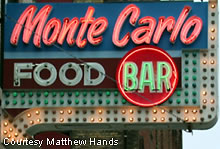
The Eats Sheet: The Monte Carlo, Mpls


Not to be confused with any place in Vegas, the Monte Carlo is probably the oldest eating establishment in the Minneapolis warehouse district still going. A century and a year old, the menu sports a solid American selection with an emphasis on traditional meat-based dishes. Steak and Salmon abound. Big, gravy-smothered open faced sandwiches are also a strength. When I get off the bus, especially during the winter, I am always tempted by the scents wafting out from the Monte Carlo's grill.

My first visit to the Monte Carlo, I had the Salmon Caesar Salad. Salad might be a bit misleading. In reality, it was more like a full grilled Salmon steak served on a bed of romaine with some dressing. Very simple, unadorned just a well-blended mix of a few flavors. The next time I had the cajun pork chops: three thin chops dusted with parika, pepper and rosemary served with fries. The spice was great, the meat was juicy (not always easy with pork). It lacked a veggie, though. It was good, but seemed a bit incomplete.

The restaurant itself is a bit like a midwest version of Monks cafe, but bigger. Waitresses were in classic black and white cafe uniform dresses. The main room opens up onto a huge copper-topped bar while booths extend toward the back. The ceiling is tin, and the lighting is low. You can almost picture a turn of the century lumber executive sitting in a cloud of cigar smoke in one of the back booths. But if you're eating during the day, it's a little too dim. Feels kind of unnatural. Outdoor dining is also available. Service is good, but not overly quick.

Overall, the Monte Carlo is a good place to eat, but at the price, it isn't a place where you'd want to go every night. Meals $10-$20.

Wednesday, April 25, 2007

The Eats Sheet & The Book Revue: The Dinosaur Bar-B-Que

In this post, the Eats Sheet and the Book Revue join forces to review the Dinosaur Bar-B-Que: the restaurant, the book, the legend.

The Legend
The original Dino BBQ was a road outfit, peddling their smoked meat wares at state fairs and biker gatherings. After 5 years on the road they opened the a restaurant in Syracuse, NY in 1988. At first just take-out, they expanded to include a bar and live blues before long. In 1998 the Rochester location opened in an old station of the defunct Lehigh Valley Railroad, overlooking the Genesee River. In 2004 the Dino opened its third restaurant, in Harlem.

The Restaurant (Rochester)

The first and most important thing you need to know about the
Dinosaur is that the food is absolutely fantastic. Not surprisingly, barbeque stand-bys like ribs, smoked brisket, and pulled pork are the foundation of the menu, but Stage's years on the road took him all over the south, and the Dino's brand of 'que is a dusky blend of authentic influences from Texas to Memphis. In addition, there are strands of Asian, Cuban, and Creole influences laced throughout the menu. Because the Dino is a rib joint, you would be remiss to not try the ribs, but the combo plates and the BBQ samplers are a good way to get a wide taste of the menu.

The goodness doesn't stop with the main dishes, though. Part of the Dino's appeal is the sides menu. My three favorites are the fresh cut fries (always crisp, never limp), the Cuban Black Beans (a great accompaniment to pulled pork), and the Honey Hush Cornbread. The Dino also has Saranac Root Beer available on tap (it comes in pints) and a variety of bottled root beers (including Pirates' Keg). If you're looking for wings, though, don't come here. The BBQ chicken wings are good, but they are not the Buffalo Wings that you would find in an average upstate New York pizza joint. In addition to a rockin' menu, the Dino also has rockin' tunes. Several nights weekly the Rochester location hosts blues artists, some local, some national. The tunes are always good. Plan to spend about $15/person to really get a good experience, but you can get cheaper meals. Vegetarian options are available (smoked portobello burger), but I don't know why you would go here to eat vegetarian.

The Book
The great thing about the Dino cookbook is that it is not just a set of instructions to make a product. It is a book of principles that can be applied in practice to the craft and the art of fine bar-b-que food. Think of the recipes as canvases on which an artist can work. It includes important instructions on how get authentic smoker flavor out of a tiny kettle grill, how to avoid overcooking a piece of meat, and how to tell when a stake is done without piercing it with a thermometer and letting all the juices out.

The book also tells you how to develop a palette of basics from with to work your art. How to create spice rubs, sauces, and marinades. My favorite dishes out of the cookbook are the Oven Roasted Mojito Chicken, and the Cuban dish, Ropa Vieja. If you're looking for a quick meal, don't look to the Dinosaur Bar-B-Que cookbook. If you're willing to donate an afternoon or even a weekend to the creation of culinary art, this is a great place to start.

The book is available on the Dino's website, but it is cheaper if you get it from Amazon.