Sean Penn's "Into the Wild": a summary judgment.
"Into the Wild" was released last Friday. I watched the trailer for it the other day and really wanted to see it. The cinematography looks beautiful, the story is compelling, and they used a great Iron & Wine and Clexico collaboration (He Lays in the Reins) in the trailer. Because I decided not to see Into the Wild, I suppose you could say this is a review based on the trailer, rather than on the merits.
Into the Wild is one of my favorite books. I remember reading the original article, entitled, "Death of an Innocent" in Outside magazine back in 1993. Krakauer is a gripping writer, and the article combines gumshoe reporting and forensic discovery with the finesse of a novelist and the introspection of an essayist. And even without fine writing the story itself is engaging: authorities find a young man's decaying body in a sleeping bag in an abandoned bus in the Alaskan wilderness---eventually the body is identified as Chris McCandless, a kid from an affluent family in the elite Northeastern establishment, but how McCandless ended up in Alaska remains a mystery, so a writer collects the clues and slowly pieces together Chris' journey across the midwest, west, southwest, and up the coast to Alaska. But Krakauer made the story better with his persistent questioning: not just where? what? who? and how? but more importantly, why?
Krakauer's article was his big break. Soon he expanded the article, delved a little deeper into the introspection, developed it into a full-length book and published it as Into the Wild. Soon after, he published Eiger Dreams, a collection of wilderness essays/memoirs, and short journalistic pieces and then Into thin Air, another book based on an Outside article, (this one about the disastrous 1996 climbing season on Mt. Everest). Krakauer admits that his writing has become obsessed with extremism in one form or another. Most recently, he published, Under the Banner of Heaven, an exploration of the perils of religious extremism using fundamentalist Dan Lafferty as a case study.
And now Sean Penn has made Into the Wild a movie. On the one hand, who can blame him. It's a great adventure story and just begs for a gorgeously shot film to go along with it. But on the other hand, if this review is to be believed, Penn takes great liberties with the facts of McCandless' life to make Chris a one-dimensional tortured anti-establishment hero and excises the introspection and questioning that made Krakauer's study of McCandless great. If this is true, it's disappointing.
I have nothing against taking artistic liberties with the facts as a theoretical principle. Some of Shakespeare's greatest works aren't faithful to history the purport to portray. The Standing on the Promises series is a fantastic work of historical fiction. But these books take artistic liberties to fill negative space in the historical record, rather than rewrite history that is reliably set down. When history is scant, I have no problem with an author filling in the blanks. Too often, though, artistic liberties and "historical fiction" are merely excuses for a failure to write compelling history.
It's one thing to write ahistorical things about ancient English Kings like Lear and Hamlet, or to use the novelist's gift to flesh out the minimally recorded lives of slaves. But using artistic liberty as an excuse to malign the character of living people is egregious. According to the review at Slate, Penn crudely justifies McCandless' disowning his family by inventing out of whole cloth a childhood of abusive memories. In reality, Walt McCandless did not get drunk and beat his wife. Spousal abuse is not among his many faults. Chris cut off all contact with his family because he disapproved of the materialistic way they lived. Their New England elitism didn't jive with his Thoreauvian ethic and his Jack London aesthetic. Their complicity in the environmental and social exploitation of American capitalism offended him. As a result, his rock-hard integrity demanded that he have nothing to do with them.
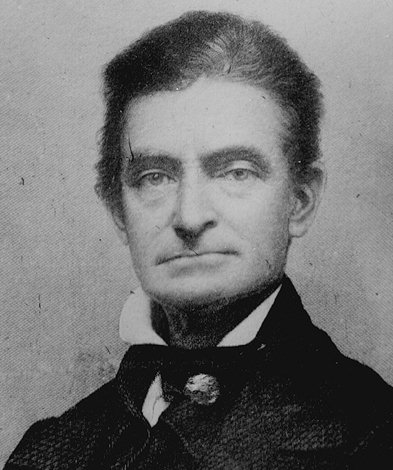
Whether these are worthy ideals is one question; whether they justify disowning a beloved family is another. Krakauer's book is good because he takes on these questions (and others), grapples with them, and refuses to take the easy way out. My beef with Penn's movie is not that it is too positive, but that it reduces Chris McCandless to a one-dimensional stock hero. Chris was not just a hippie or an emo hero, and his life story should be more than a surfer movie sans surfing. His staunch ethic makes him more like firebrand John Brown than flowerchild Thoreau. And like John Brown, Chris McCandless' is a bundle of contradictions that should make us think about ourselves. It's unfortunate that Penn's hagiographic portrayal hasn't preserved this. I don't think I want to see Into the Wild after all.